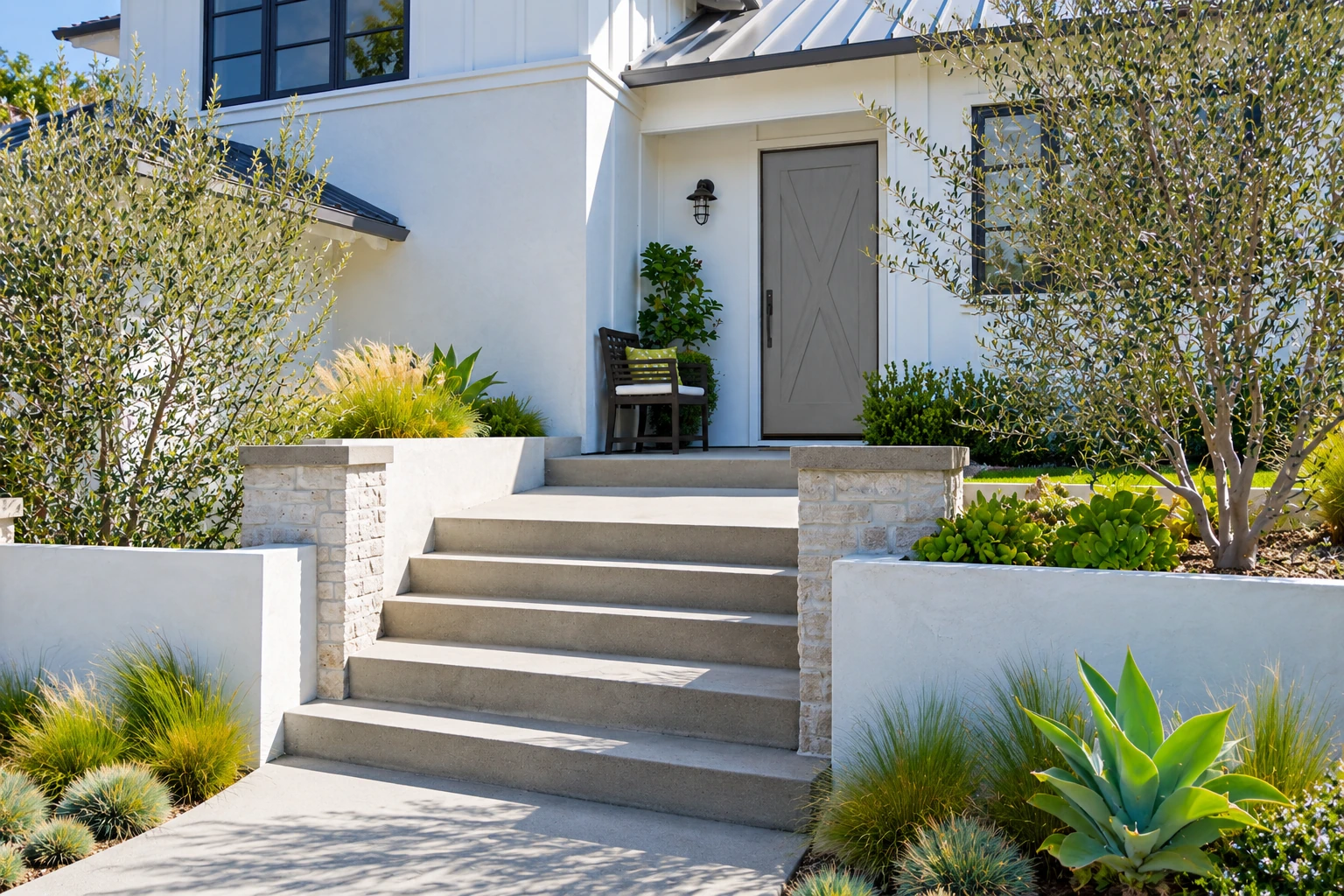
Concrete steps construction in Santa Ana CA - a solid way up to your front door
Front steps cracked, sinking or pulling away from the house? We build precast or poured steps that meet your door and walk cleanly.
Talk through your new steps with us
Call (714) 439-5472 and ask whatever's on your mind about precast or poured before anyone comes out to measure.
What goes into building new concrete steps in Santa Ana?
Concrete steps construction in Santa Ana means replacing worn or broken entry steps with new ones, either precast units set in place or steps our crew forms, pours and finishes on site, built to meet your door, your walk and any slab cleanly.
Most calls start with a step that's cracked, settled or pulling away from the house, and the real question is whether to patch it or start over. The price mostly turns on how many steps you need, whether a standard precast set fits your entry or the steps have to be formed and poured, how much old concrete comes out, and whether the new steps tie into a walk or slab. The schedule turns on that same choice, plus any permit and the curing wait before you can use them, and I lay all of it out in the written estimate after I've seen your entry. We're based in Santa Ana and work in the cities around it across Orange County and nearby.
Why Santa Ana homeowners call C&M Santa Ana Concrete Company for steps
I see every job in person
I come out to every job myself, and our crew does the forming, pouring and finishing with me on site for most of it. You're talking to whoever is there for the pour.
In business since 2017
I learned concrete working my dad's jobs, then started this company and have run it for nine years. You get someone who has seen how steps age and can tell you before we pour.
Licensed for work by the street
We're licensed and insured. When steps reach into the public right of way by the street, the city requires a licensed contractor to do that work, so you're not left looking for one halfway through.
Steps carry a lot of weight on a small footprint, so ask me anything before we pour. When you're ready, tell us about your steps.
How we handle concrete steps construction
Before anything gets torn out, I help you weigh precast against poured for your entry and work out how the new steps will meet your walk or any slab at the bottom. Then we break out the old steps, dig down to firm subgrade, the soil the steps sit on, and pack a base so they don't settle with loose dirt. For poured steps we build the forms, set rebar, the steel bars that hold the concrete together, and try to pour before the hottest part of the day, because concrete that dries too fast ends up with a weak, dusty top. Where the steps meet the house, we leave a filled joint between them so one can move without pulling on the other. We give the treads a broom finish, a light brushed texture that gives your shoes some grip, and keep the new concrete covered and damp while it cures, which is the wait that lets it reach its strength. If a budget has to give somewhere, I'd rather trim the finish than the base, because nobody sees the base on day one but it's what keeps steps from sinking or tipping toward your door.
Steps often sit on or against other concrete. When they're part of a new house or addition, they connect to the work we do for slab foundation building and foundation installation, and planning them together lets us line up where the steps land and how they meet the house before anything is poured.
Precast steps
These suit an entry where a standard precast size fits and you'd like to spend less. We still set them on a packed base and plan how they meet your walk, so settling doesn't open a gap.
Poured-in-place steps
These suit entries that need a size precast doesn't come in, or steps that join an existing walk or slab. We form and pour them on site, so the shape follows your entry instead of the other way around.
How can you tell your front steps need replacing?
Steps pulling from the house
A gap opening between the top step and the house wall usually means the steps are settling on their own. Left alone, water runs into the gap and the lean keeps getting worse.
A step that sinks or rocks
An uneven step or a landing that dips usually means the base under it has washed out or was never packed. Waiting turns a trip hazard into a full tear-out.
Cracks across the treads
A crack running across the part you step on often means the concrete moved underneath. Small cracks can sometimes be patched, but water in them widens them every season.
Chipping or flaking surface
A top layer that's peeling or dusting away usually points to a weak surface from the original pour. Caught early it can be resurfaced, while waiting lets whole edges break off.
What happens when you call about steps in Santa Ana?
Call for an on-site look
You call or send the form, and we set a time. I look at your entry, walk you through the options and then send a written estimate.
We permit, form and pour
Once you say go, we handle any permit, then prep, form, pour and finish. For street-side work, the city suggests plans go in several weeks early because review can take a while.
Walk the finished steps together
When the steps are done, I walk them with you and go over the joint by the house and the upkeep they'll need. We keep foot traffic off while the concrete cures.
Questions about concrete steps
These are the questions people ask most about new steps here. If yours isn't covered, call or send the form and ask me about your own entry.
How much do new concrete steps cost in Santa Ana?
Across the US, installing concrete steps usually runs about $100 to $500 per step, going by a national cost guide. That's the general market range for installation, not our price. Your own figure comes in the written estimate after I've looked at your entry.
What is the best way to choose between precast and poured concrete steps?
Pick precast when a standard size fits your entry and price matters most, and pick poured when it doesn't or the steps have to tie into an existing slab. Precast costs less because the units are hollow and easier to set, while poured steps come in a wider range of sizes. One stair guide puts the higher cost of poured down to forming labor, so if your steps join a slab, budget for poured from the start.
Who issues permits for steps near the street or sidewalk in Santa Ana?
Santa Ana's Public Works Agency issues encroachment permits for work in the street and public right of way, and its list names sidewalk repair, not concrete steps. Building permits come from the city's Building Safety Division, so that's the office to ask whether your steps need one. We check with the building office early on each job and pull the permit as the licensed contractor when one's needed.
How long do concrete steps last?
With proper care and upkeep, concrete steps usually last 30 to 40 years, according to a national cost guide. Patching a crack while it's small, before a section starts flaking apart, goes a long way toward getting there.
How do I know whether to repair or resurface my concrete steps?
Repair usually fits when the damage is a crack or a small chipped section of one step, while resurfacing is the better call for large areas that are cracking or flaking. If the steps have sunk or pulled away from the house, neither fixes the cause, and replacing them is usually the honest answer.
Do I need a licensed contractor to replace concrete steps in California?
For most step jobs, yes. California lets someone without a license do minor work only when the job is under $1,000, doesn't need a permit and they don't hire anyone to help. A concrete contractor's state license covers forming, pouring, placing and finishing concrete, which is the whole of a poured step job.
Get a written estimate for your steps
Tell us how many steps you have, add a photo or two and say whether they meet a sidewalk or an existing slab. We reply within one business day to set a free on-site estimate, with no obligation.
Concrete steps and entries
Work that often goes with steps
Slab foundation building
If you're building a new slab home or addition, planning the entry steps with the slab sets where they land and how they meet the floor.
Learn moreFoundation installation
When a new foundation goes in, it decides the height your door sits at, so it pays to plan the steps up to it at the same time.
Learn more