Concrete Parking Lot Building in Santa Ana CA - a lot planned before the first pour
Your lot is dirt, gravel or tired paving, and the city steps look confusing. We plan it with you and pour a lot that holds up.
Start your parking lot plan with a call
Call (714) 439-5472 or use the form, and have your lot's rough size and any existing paving plans handy so my first visit goes straight to your options.
What goes into building a concrete parking lot in Santa Ana?
Concrete parking lot building in Santa Ana means preparing the ground, then forming, pouring and finishing the slab your tenants and customers drive and park on, and most of how it turns out is decided in the planning before the first truck arrives.
If your lot is dirt, gravel or worn-out paving, the city requires parking areas and driveways to be paved with asphalt or concrete, and any accessible spaces have to meet at least the site accessibility rules in the California Building Code. The price moves with the lot's size, how much grading and base work it needs, the slab design, drainage, tearing out any old surface and whether you go with standard or pervious concrete. The schedule turns mostly on the soil study, the engineered plans and the city's review, which all come before any digging, and my written estimate spells out what applies to your lot.
Why Santa Ana owners call C&M Santa Ana Concrete Company for their lots
I look at every lot myself
I come out to see every job myself, and I'm on site with our crew for most of the forming, pouring and finishing. The person you met is the one watching the pour.
Running our own crews since 2017
I learned concrete on my dad's crews and started this business in 2017. Nine years of our own jobs means I know how a slab ages, and I'll tell you before we pour.
Licensed and insured on every job
We're licensed and insured, which matters on a lot where a crew, a mixer truck and your property share the same ground. We're based in Santa Ana and work across Orange County and nearby.
Most of what decides how a lot holds up is settled before the first truck shows up. Tell me about your lot and I'll come take a look.
How we handle concrete parking lot building
A lot starts on paper, so I help you line up the soil study and the city steps early. In Santa Ana the paving section, meaning the layers under the lot and how thick they are, follows a soils report the city reviews and approves, and the grading plans need a registered civil engineer's stamp and signature. Then I go over the joint layout with you, because joints are planned lines cut into the slab that steer cracks to spots we chose instead of across the middle of a stall. Our crew digs out and packs the subgrade, the ground the slab sits on, checks where the water will run, pours early in the day so the heat doesn't leave a weak, dusty top, cuts the joints on time and gives it a broom finish, a light texture that keeps tires and shoes from slipping. If the budget gets tight, I'd rather trim the finish than the base, because the base is buried on day one and it's the part that decides whether your slab settles.
Some lots need more than flat paving. Anything that stands at the edge of the lot, like a light pole or a low wall, needs concrete footings set before we pave, and if a building next to the lot has settled, foundation raising can bring it back up so the new slab meets it at the right height.
Standard concrete paving
This fits most lots, especially ones with delivery trucks or steady traffic. The solid slab sheds rain toward your drains, and it's the surface most owners pick for a busy lot.
Pervious concrete
This is for a lot where runoff is a worry. The porous mix lets rain soak through to a rock bed below instead of running off, and we'll talk through whether it fits your lot before anything is designed.
Replacing an older lot
This is for a lot that's cracked, sunken or patched past saving. We take out the old surface, rebuild the base and pave fresh, after sorting out which city steps the size of the job brings.
How can you tell a parking lot needs new concrete?
Water standing in stalls
Puddles that sit long after rain usually mean the base has settled or the lot was never sloped to drain. Water left there soaks underneath and widens the low spots.
Cracks running every direction
Cracks that wander across stalls usually mean the joints were cut late or skipped, or the ground moved. Left open, they let water in, the edges chip and repairs spread.
Sunken edges and drains
Slabs dropping near drains, curbs or edges usually mean the dirt under them was never packed. The lip grows each season, catching tires and tripping people walking in.
Dusty, flaking surface
A top that wears to powder or flakes off often comes from a pour in midday heat or a rushed finish. Once the rock underneath shows, the wear speeds up.
What happens after you call about a parking lot?
Call and set the visit
Call or send the form and we'll set a time. I walk the lot, ask how it gets used, go over your options and then send you a written estimate.
Permits, prep, forms and pour
Once you say go, we sort out any permit the job needs. Then our crew preps the base, sets the forms, pours and finishes the slab.
Walk the finished lot together
We walk the lot with you at the end and go over curing, the wait while the concrete gains strength before cars park on it, and the upkeep it'll need.
Parking lot questions, answered
These are the questions owners ask most before a lot goes in. If yours isn't here, call or send the form and I'll answer it for your lot.
Do I need a permit to build a concrete parking lot in Santa Ana?
Plan on city steps before any work starts, because the city's Public Works Agency needs a water quality checklist, which the city calls a WQMP, before it issues any permits. If the checklist total comes to 5,000 square feet or more, you'll also need a grading permit. We check with the city's building office early on, and when a permit is needed, we can pull it as the licensed contractor.
Can I use pervious concrete for a parking lot?
It can be a good fit for a lot with light traffic, which is where pervious concrete has traditionally been used. Rain passes through the porous slab into a crushed-rock base that holds the water and cuts runoff, and those layers get sized to the storms, soil and traffic at your site. I'll look at how your lot gets used before I suggest it.
Who is licensed to build a concrete parking lot in California?
The state licensing board has two classes that fit this work. Its concrete contractor class pours and finishes pavement, and its earthwork and paving class grades and places paving. A new lot usually involves both, since the ground gets graded before the slab goes down.
How long does a concrete parking lot last?
A concrete lot designed for the way parking is used, which is different from street traffic, can give satisfactory service for many years with little maintenance. That's why the design and the ground under it get so much of our attention, and I'll tell you honestly at the estimate how yours should age.
How much does a concrete parking lot cost in Santa Ana?
It depends on your lot, and I'd rather give you a real figure in a written estimate than guess here. Tearing out old paving, rebuilding the base, the engineering and city review, and choosing pervious over standard concrete all push the price up, while a simple layout on ground that's close to grade keeps it down.
How do I know if repaving my existing lot in Santa Ana needs a grading permit?
It mostly comes down to how much hard surface you add or replace and whether the city sees the job as routine maintenance. Adding or replacing 5,000 square feet or more of hard surface on an already developed site counts as significant redevelopment under the city's water quality rules, while routine maintenance means keeping the lot's original line, grade and purpose. Even maintenance jobs can need a grading permit if the Public Works Agency decides so, and for questions about your own lot we'll point you to the right city office.
Get a written estimate for your lot
Tell us the lot's rough size and send any paving plans you have, and we'll reply within one business day to set a time. I'll come out for a free on-site estimate, with no pressure and no obligation.
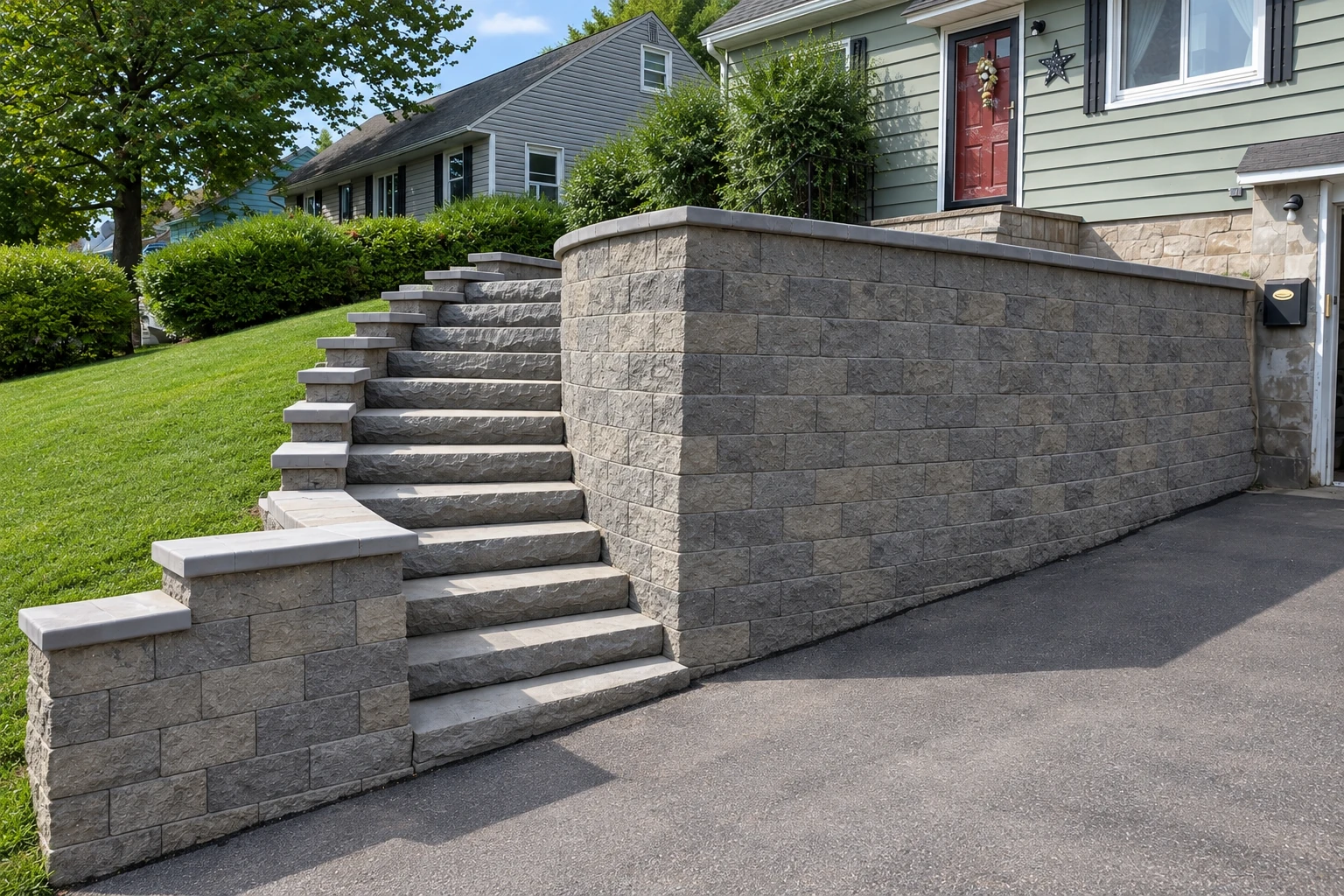
Examples of concrete paving
Other work around a lot
Concrete footings
Footings give carport posts, sign bases and block walls something solid to stand on, and they're easiest to place while the ground is still open.
Learn moreFoundation raising
If the building beside your lot has sunk or its doors stick, lifting it first keeps new paving from meeting a wall at the wrong height.
Learn more